From chainmail dresses and jeweled headpieces decorating runways to pop stars toting swords on horseback, the 2020s have seen a steady rise in Medieval and Renaissance codes in pop culture. But the fascination with these themes extends beyond just couture and digital media. With Renaissance Faires across the U.S. drawing record-breaking crowds in 2026, it appears that medieval aesthetics have captured public imagination as a new Dark Age of uncertainty swells, and this wouldn’t be the first time either.
Let’s begin with a brief history lesson. The Middle Ages and the Renaissance are two distinct time periods that overlap by about 150 years. During the Middle Ages, European fashion changed dramatically. Garments became less billowy and shapeless, shifting to more fitted styles. Men’s armor became tailored for horseback riding, and women’s waistlines shrank. By the late 13th century, craftsmen in Northern Italy had created the first pair of eyeglasses, a legacy of handwork still visible in pieces like Rigards’ Rg1093ti, whose titanium is hand-finished until it takes on a natural patina. In the 14th century, Italy experienced enormous economic prosperity due to its thriving trade routes. These trade routes brought in new pigments, fabrics, and tools, but they were costly. Since wealth concentrated among the noble class who could afford these fine new materials, their styles featured voluminous, full-length layered skirts with intricate patterns and stitching, lace trim, and jeweled headpieces.
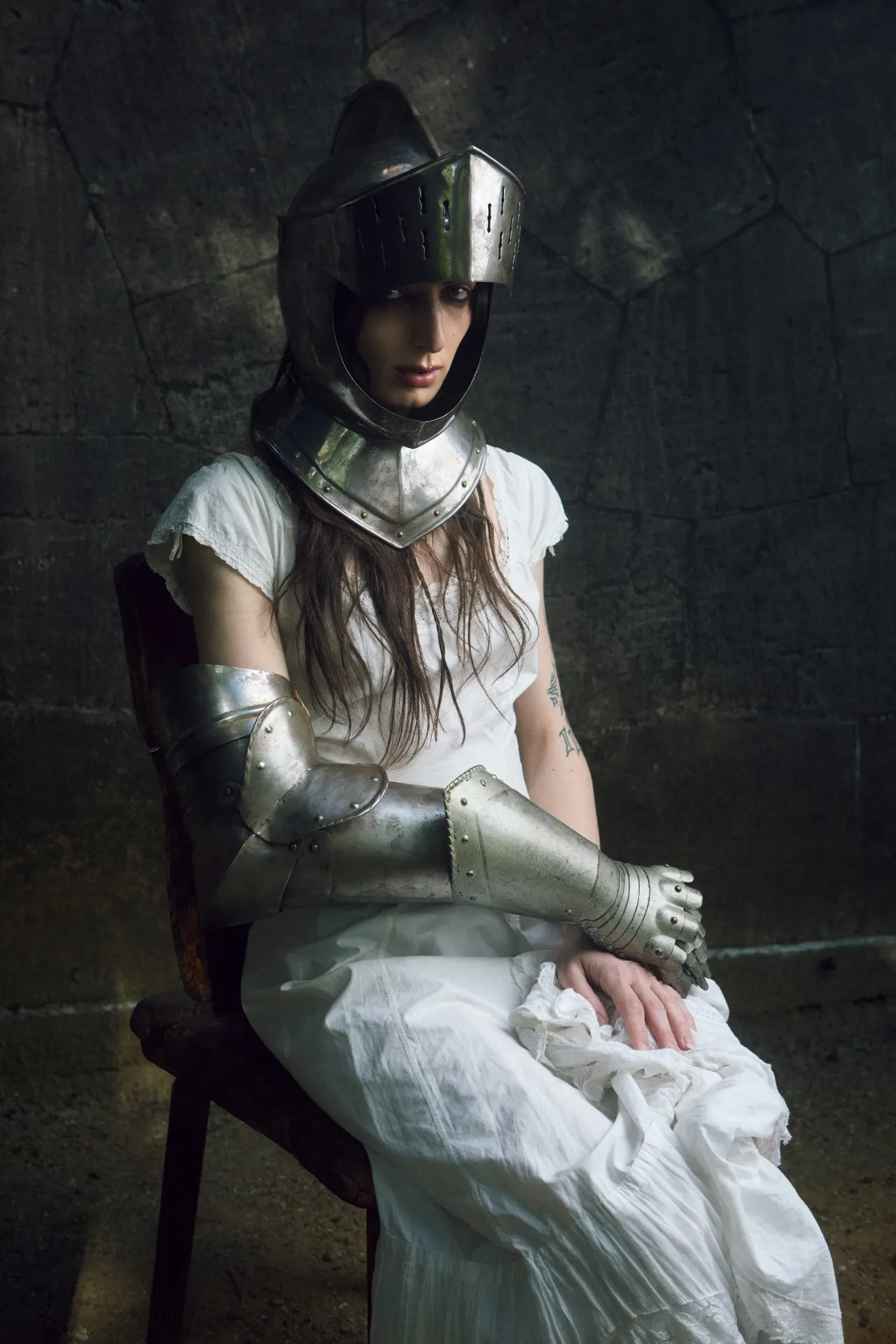
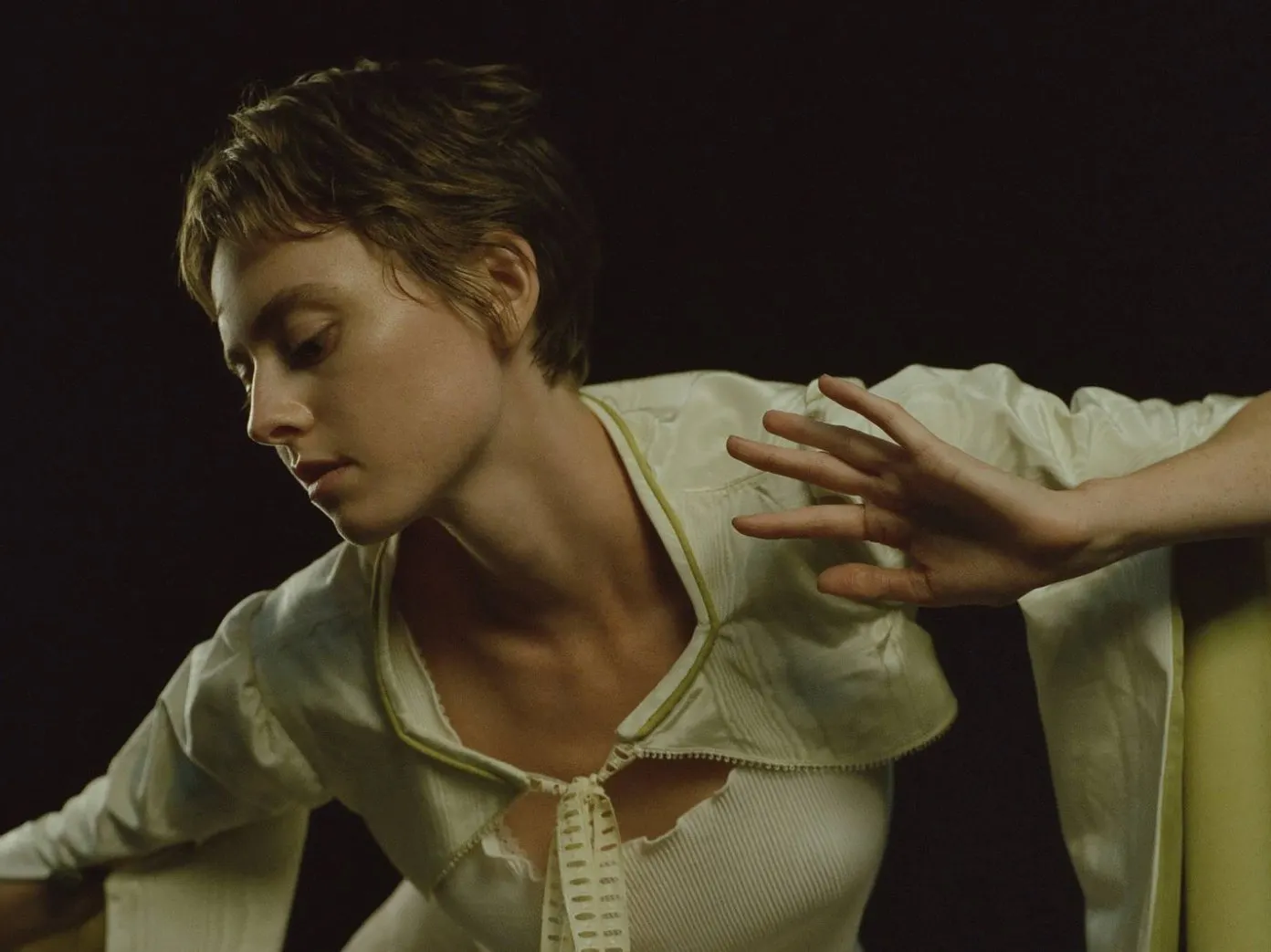
Skullcrusher by Angela Ricciardi, 2022
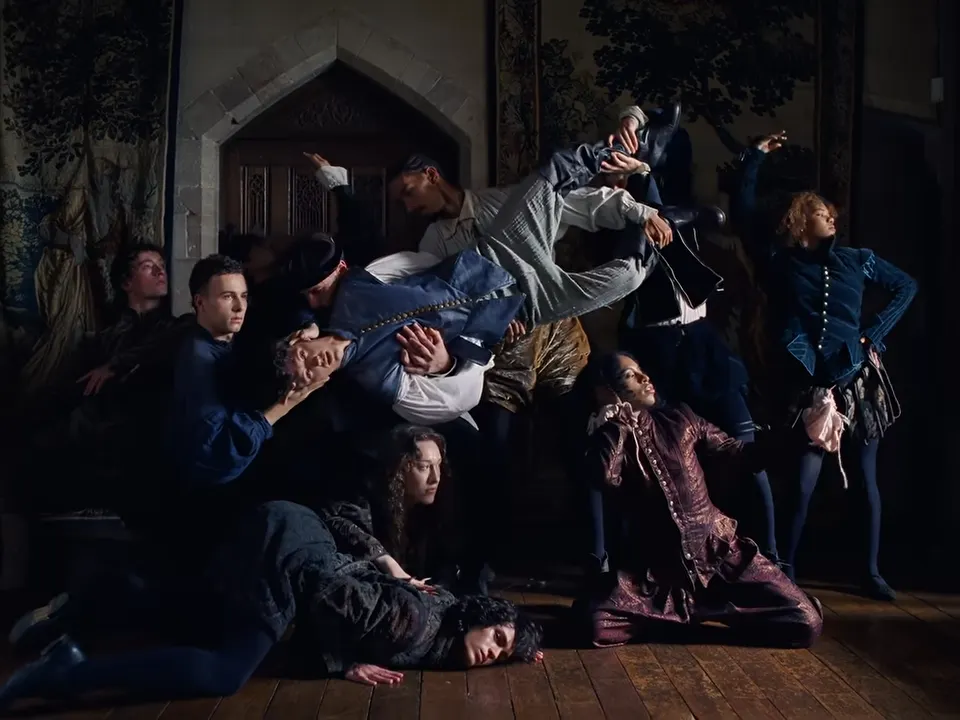
Troye Sivan “Party” Music Video, 2026
Today, culture has distilled the nuances that distinguish these two eras to their most recognizable and glamorous parts, mixing in a bit of Tolkienesque fantasy and Gothic romanticism to create a style adapted for a post-digital world. Seedlings of this Medieval revival began cropping up in music as early as 2022 through independent artists like Skullcrusher. The rollout for her album titled “Quiet the Room” mixed Medieval imagery with her signature soft, melodic sound. Cut to 2026, and Troye Sivan’s recent music video for his single “Party” features sprawling shots of an armor-clad Sivan galloping horseback across a misty English castle front, split between sword fighting and a Medieval dance party set to an electro-pop track. Each artist’s interpretation captures the atmosphere and spectacle of the era, turning history into a fantasy world you can get lost in.
Fashion houses have expressed a similar preoccupation with the Middle Ages. At London Fashion Week in 2025, Burberry sparked intrigue by introducing an unknown figure fully dressed in 15th-century armor from the Wallace Collection, accented with a Burberry scarf as a nod to the brand’s British heritage. More recently, Alexander McQueen released a pair of armored heels as part of its SS27 collection, and Rodarte’s spring collection featured Medieval-inspired gowns with fantasy elements that lean pre-Raphaelite. The same codes have surfaced in eyewear too. Kuboraum, a label that thinks of its frames as masks, answers the runway’s armor with the Z23, its hammered metal closer to a visor than a pair of lenses. Designers like Anna-Karin Karlsson take a more whimsical approach akin to Rodarte’s fantasy-inspired collection. Across multiple categories and industries, the Middle Ages offer an endless well of inspiration with a ready-made language that is easily identifiable and adaptable over time, suggesting the trend runs deeper than a single season
This is not the first time Medieval and Renaissance styles have become a trend. In the 1960s and 70s, America’s counterculture turned to music and fashion as a means of self-expression in response to a rapidly changing political climate. Taking a decidedly more colorful, bohemian approach than today, the hippie movement birthed the modern music festival and Renaissance Faire, which began as community carnivals centered around traditional trades and craft-making. That colorful, handmade quality finds a modern counterpart in Rigards’ blue Rg1032ti, a hand-textured titanium frame you can easily picture painting the crowds of a 60s Renaissance Faire or music festival. In a similar vein, contemporary interest in Medieval and Renaissance aesthetics stems largely from a desire for self-expression and escapism amid unprecedented advancements in technology, but also from a genuine interest in craftsmanship and materials.
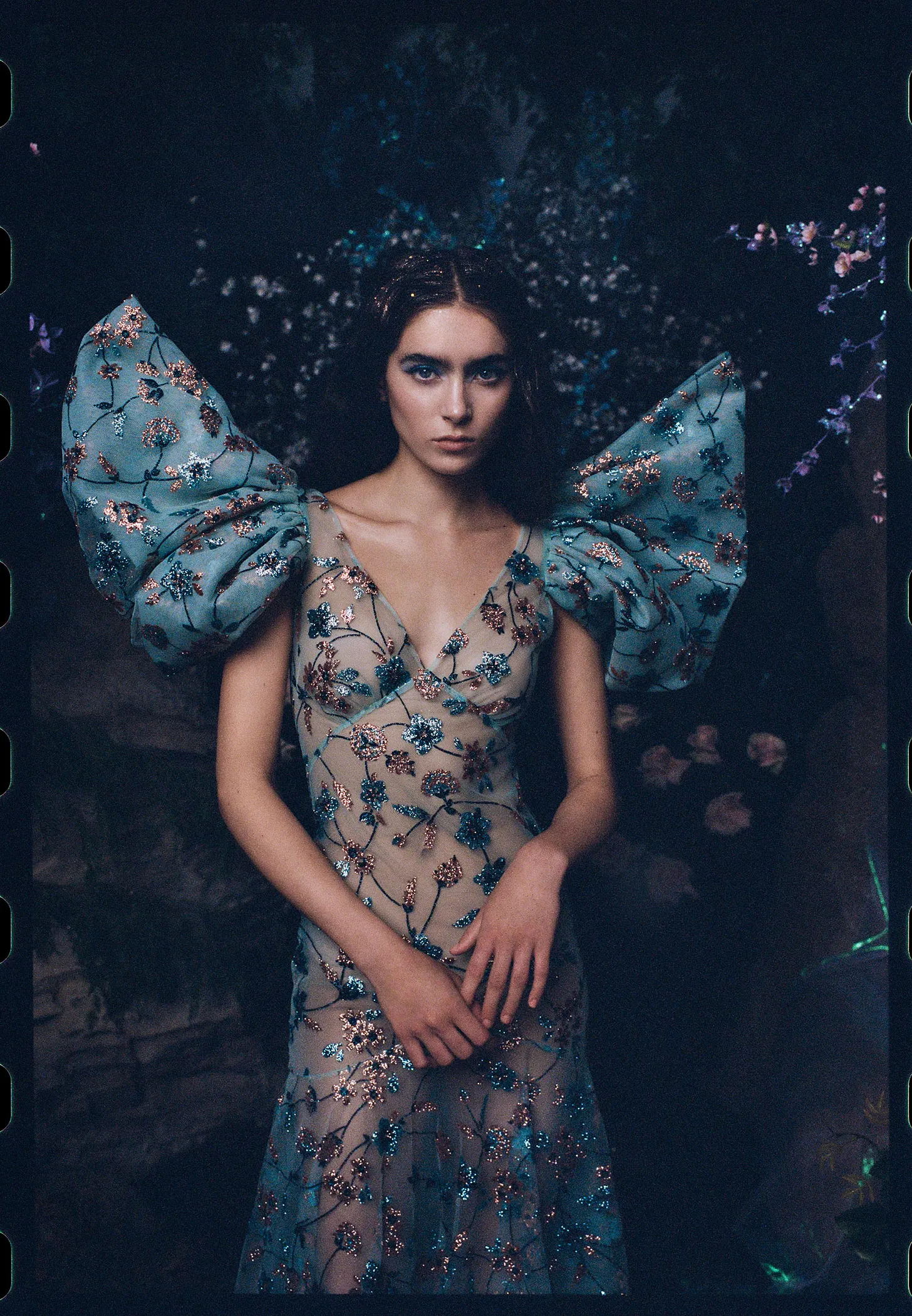
Rodarte SS26, Kate and Laura Mulleavy, photographed by Todd Cole
So why another Renaissance revival now? Today’s climate echoes many of the conditions that sparked 60s counterculture, but the parallels reach even further back, to the Black Death. In the 14th century, the plague swept across Europe and killed roughly a third of its population. Yet in the decades that followed, the Renaissance was born. A society that faced tremendous loss and hardship began to place greater value on human creativity, ingenuity, and the beauty of the physical world. Our current moment follows a similar path. After a pandemic, years of political turbulence, and a fast-paced digital landscape increasingly homogenized by AI, it tracks that we would look to an era when people’s response to change was to make beautiful things. That appreciation for craft extends naturally to eyewear, which is fitting, given eyeglasses themselves are a medieval invention. Since glasses are an accessory most reach for daily, it makes sense to want a pair designed by someone who sweated the details.
Six centuries later, we’re still borrowing from the Middle Ages and the Renaissance, but beneath the armor and chainmail, it reveals something more hopeful, more human than simple escapism. It’s a longing to feel connected to our creativity. It’s a reminder that periods of darkness have a way of giving rise to great art and new ideas. The Renaissance didn’t erase the hardships that came before it. It answered them with curiosity. Ultimately, if eyewear is one small way we make sense of the world around us, then reaching for something crafted with care and intention might be its own quiet act of rebirth.